Women in History: Powerful Stories of Remarkable Women Who Changed the World
Women in History: Stories of Women Who Changed the World

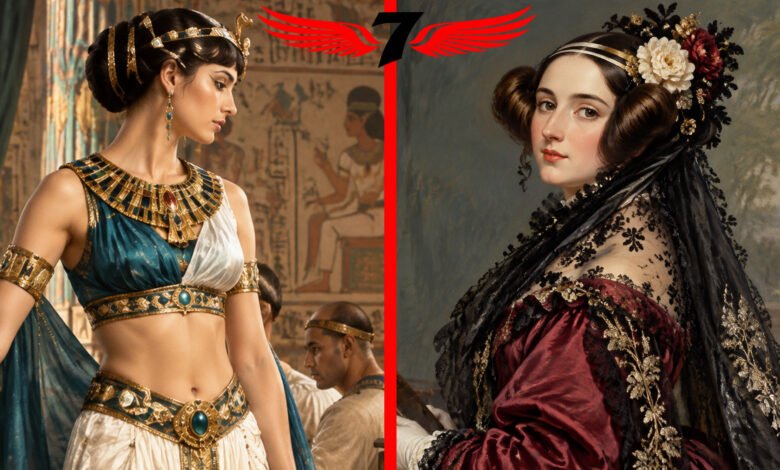
Throughout history, extraordinary women have challenged limits, shaped societies, and created lasting change across science, politics, arts, activism, and human rights. The stories of women in history reveal how courage, intelligence, and determination can influence generations. From pioneering scientists and fearless leaders to artists and advocates for equality, these remarkable figures changed the way people understand the world. Their achievements often came during times when women faced significant barriers, making their contributions even more meaningful. This article explores some of the most influential women whose ideas, discoveries, and actions continue to inspire millions today.
Quick Bio
| Detail | Information |
|---|---|
| Topic | Women in History |
| Focus | Remarkable women who changed the world |
| Fields Covered | Science, politics, activism, arts, literature, leadership |
| Known For | Breaking barriers and creating lasting social impact |
| Historical Periods | Ancient world to modern era |
| Major Contributions | Human rights, discoveries, education, culture, innovation |
Why Women in History Matter
Women in history matter because their contributions have shaped nearly every major area of human progress. For centuries, many women lived in societies where they had limited access to education, political power, financial independence, and professional recognition. Despite these challenges, they created discoveries, movements, and cultural achievements that transformed communities worldwide.
Studying influential women is not only about celebrating individual success. It also helps explain broader historical changes, including advances in civil rights, scientific progress, democratic movements, and cultural development. Their stories provide important examples of leadership, resilience, and creativity.
From ancient rulers to modern activists, these women demonstrate that history is not shaped by one group alone. It is built through contributions from people with different backgrounds, experiences, and perspectives.
Marie Curie: A Pioneer Who Changed Science
Marie Curie remains one of the most recognized figures in scientific history. Born Maria Skłodowska in Warsaw in 1867, she became a groundbreaking physicist and chemist whose research transformed the understanding of radioactivity.
Curie discovered the elements polonium and radium with her husband Pierre Curie. Her scientific work earned her two Nobel Prizes: the Nobel Prize in Physics in 1903 and the Nobel Prize in Chemistry in 1911. She became the first person to win Nobel Prizes in two different scientific fields.
Beyond her discoveries, Curie helped develop mobile X-ray units during World War I, allowing doctors to treat injured soldiers better. Her career challenged the belief that scientific research was primarily a male profession and opened doors for future generations of women scientists.
Rosa Parks: The Woman Who Helped Spark a Civil Rights Movement
Rosa Parks became a symbol of the fight against racial segregation in the United States. On 1 December 1955, Parks refused to give up her seat on a Montgomery, Alabama, bus to a white passenger, an act that led to her arrest and helped inspire the Montgomery Bus Boycott.
While Parks is often remembered for that single moment, her activism began long before the boycott. She worked with the NAACP and spent years supporting efforts to challenge racial injustice.
Her courage became a powerful example of peaceful resistance. The movement that followed contributed to major civil rights victories, including legal challenges to segregation.
Amelia Earhart: Breaking Barriers in Aviation
Amelia Earhart changed perceptions about women in aviation during the early 20th century. She became the first woman to fly solo across the Atlantic Ocean and set numerous aviation records.
Earhart was also an author and advocate who encouraged women to pursue careers and opportunities traditionally dominated by men. She believed aviation represented freedom, exploration, and independence.
Her disappearance in 1937 while attempting to fly around the world remains one of aviation’s greatest mysteries. Although many theories exist, no one has conclusively established the exact circumstances.
Her legacy lives on through organizations and educational programs that promote opportunities for women in aviation and science.
Malala Yousafzai: A Modern Voice for Education
Malala Yousafzai became an international advocate for girls’ education after speaking publicly about children’s right to attend school.
Born in Pakistan’s Swat Valley in 1997, Malala gained attention for sharing her experiences under Taliban rule, where girls’ education was restricted. In 2012, she survived an assassination attempt carried out by a Taliban gunman because of her activism.
After recovering, she continued her advocacy through the Malala Fund. In 2014, she became the youngest recipient of the Nobel Peace Prize.
Her work has brought global attention to educational inequality and the importance of providing opportunities for girls worldwide.
Ada Lovelace: The First Computer Programmer
Ada Lovelace is widely recognised as one of the earliest computer programming pioneers. Born in 1815, she worked with mathematician Charles Babbage and wrote notes describing how his Analytical Engine could perform operations beyond simple calculations.
Her vision was remarkable because she understood that computers could potentially work with symbols, music, and information—not just numbers. Long before modern computers existed, she imagined possibilities that later became central to computer science.
Today, Ada Lovelace is celebrated as an important figure in technology history and a symbol of women’s contributions to innovation.
Frida Kahlo: Art, Identity, and Personal Expression
Frida Kahlo became one of the most influential artists of the 20th century. Known for her deeply personal self-portraits, Kahlo explored themes of identity, pain, culture, and human experience.
Born in Mexico in 1907, she developed a unique artistic style influenced by Mexican traditions and her own life experiences. Her paintings often reflected physical struggles, emotional challenges, and questions about identity.
Although she was not widely recognised internationally during her lifetime, her work gained increasing attention after her death. Today, Kahlo is considered a cultural icon whose art continues to influence artists and audiences worldwide.
Women in History Who Created Lasting Change
Many other women have made significant contributions across different fields. Their achievements show the wide range of ways individuals can influence society.
Woman Field Major Contribution
Florence Nightingale Healthcare Improved nursing standards and hospital care.
Jane Goodall Science Advanced understanding of chimpanzee behaviour and conservation
Maya Angelou Literature Created influential works on identity and equality
Katherine Johnson Space Science Contributed critical calculations for NASA missions
Eleanor Roosevelt Human Rights Helped advance international human rights efforts
These women represent only a portion of the many individuals whose ideas and actions shaped the modern world.
The Continuing Impact of Remarkable Women
Women’s influence in history continues today through education, research, politics, entertainment, business, and social movements. Modern leaders, scientists, artists, and activists often build on the foundations created by earlier generations.
These stories also show the importance of preserving historical records. Many women’s achievements were overlooked or minimised in their time, and historians continue working to recognise contributions that were previously underrepresented.
The lessons from these women extend beyond their individual accomplishments. They show how persistence, creativity, and a commitment to positive change can reshape societies.
Conclusion
The stories of women in history are stories of innovation, courage, and transformation. From Marie Curie’s scientific breakthroughs to Rosa Parks’ fight for equality and Malala Yousafzai’s education advocacy, these remarkable women changed the world in ways that continue to influence future generations. Their achievements demonstrate that progress often begins with individuals willing to challenge expectations and create new possibilities. Exploring their lives deepens our understanding of history and highlights the many contributions women have made across cultures and generations.
More Celebrity: Explore in-depth biographies, career journeys, family backgrounds, and the latest updates on your favourite celebrities at 7 Wiings.
(FAQs)
Who are some of the most influential women in history?
Some of the most influential women in history include Marie Curie, Rosa Parks, Amelia Earhart, Ada Lovelace, Frida Kahlo, Malala Yousafzai, Florence Nightingale, and many others who transformed science, culture, politics, and human rights.
Why is learning about women in history important?
Learning about women in history helps recognise contributions that have shaped societies and provides a more complete understanding of human progress.
Who was the first woman to win a Nobel Prize?
Marie Curie was the first woman to win a Nobel Prize. She received the Nobel Prize in Physics in 1903 for her research on radiation.
Which woman is known as the first computer programmer?
Ada Lovelace is often recognised as the first computer programmer because she described how Charles Babbage’s Analytical Engine could perform advanced calculations.
How did Rosa Parks influence history?
Rosa Parks influenced history by helping inspire the Montgomery Bus Boycott, a major event in the American civil rights movement against racial segregation.
Who is the youngest Nobel Peace Prize winner?
Malala Yousafzai became the youngest Nobel Peace Prize winner when she received the award in 2014 for her advocacy for children’s education.